
Quick answer
- Check whether the buttons, blade, starting function, or all functions failed.
- Compare a known-good spare if one exists.
- Use the vehicle manual for the correct battery and procedure.
- Hi-Q offers key-fob programming for supported vehicles.
Name the failure before buying a part
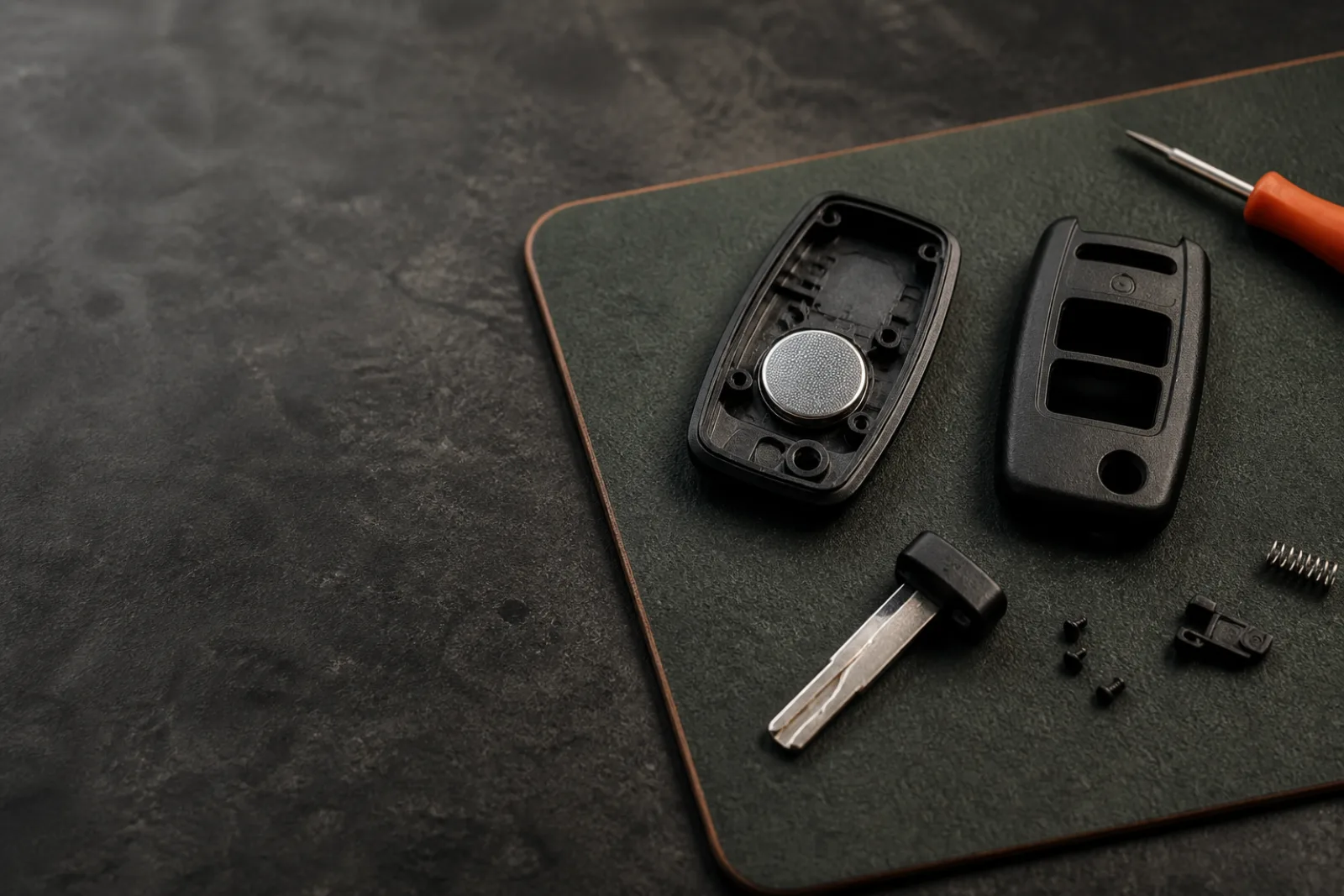
'The key stopped working' can mean four different things. The remote buttons do nothing, the blade will not turn the door, the shell has split, or the vehicle will not start. Those symptoms point in different directions. Write down what still works before replacing a battery or ordering a shell.
Stand in a normal safe position near the vehicle and try the lock and unlock buttons once. Then test the documented mechanical access method if the owner's manual describes one. Do not keep stabbing a bent blade into a stiff door lock.
For confirmed duplicate work, see duplicate car keys. The separate AutoZone comparison explains retailer limits and keeps Hi-Q's confirmed scope separate.
Use a working spare as a clean comparison
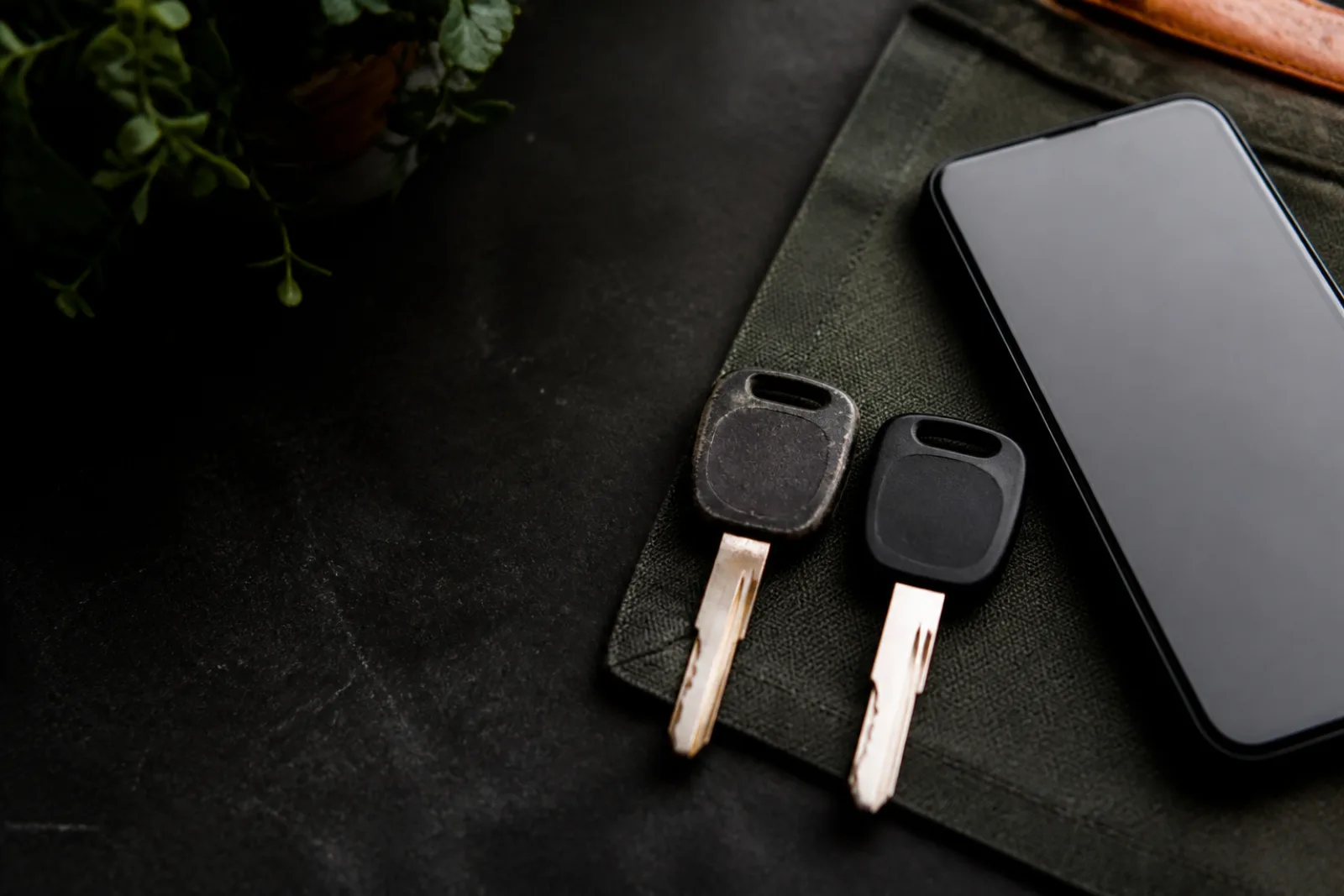
If a known-good spare works normally from the same position, the first key is the likely problem. If both fail at the same time, consider the vehicle, its battery, interference, or another system issue. That does not prove the cause, but it prevents buying two key batteries when the car itself is unresponsive.
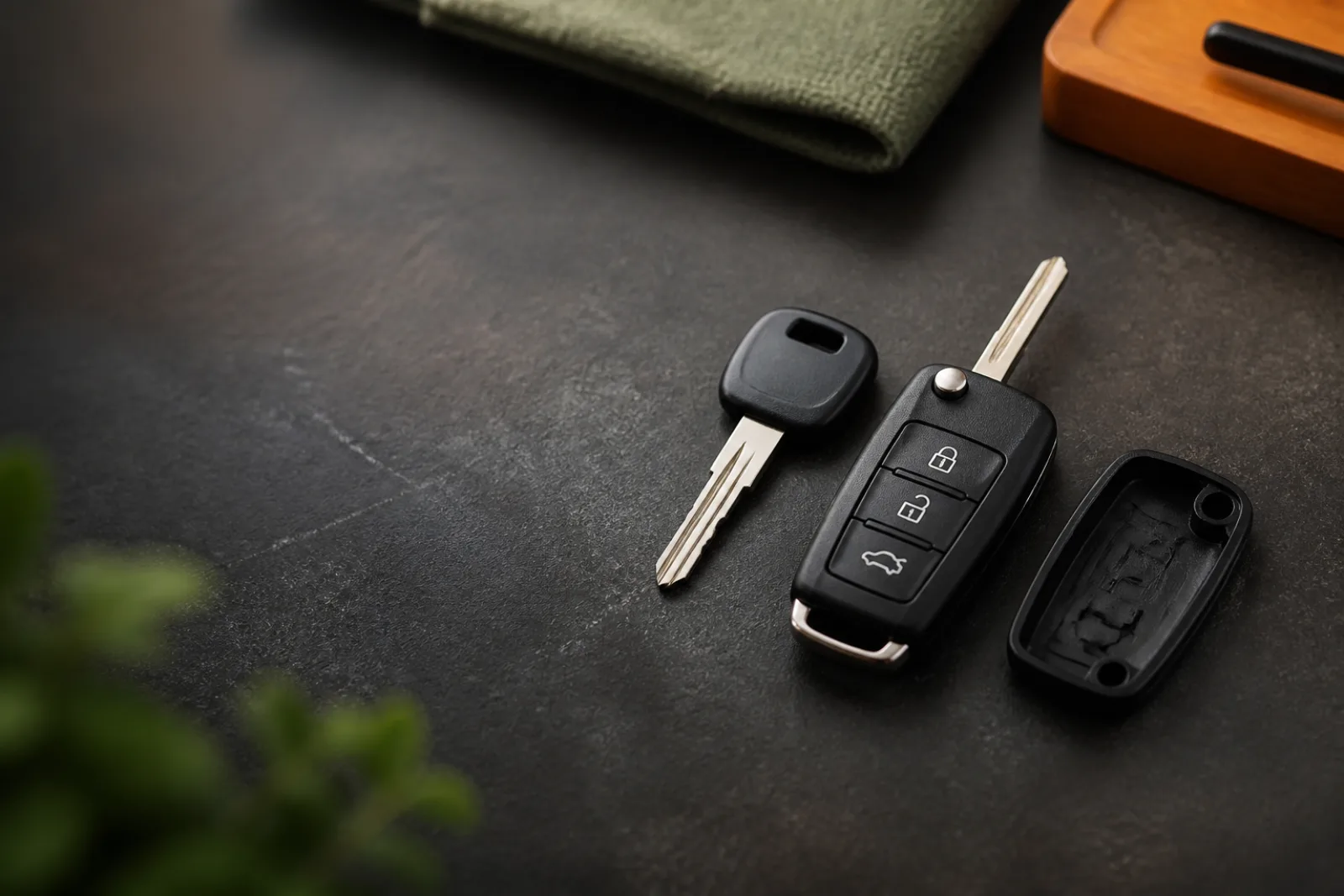
Compare condition as well as function. Look for a cracked case, loose buttons, a missing pad, corrosion at a seam, a blade that rocks in the head, or evidence of water. Do not open a swollen, hot, leaking, or badly damaged device.
A spare that has sat in a drawer for years is not automatically a perfect control. Its own battery may be weak. Note when each key last worked and whether either one was dropped or washed.
Battery and shell checks
| Symptom | Possible category | Safe next check |
|---|---|---|
| Buttons weak or intermittent | Battery, contact, wear, distance | Use manual and compare spare |
| Buttons work but blade binds | Blade, cylinder, door pressure | Stop forcing and inspect mechanically |
| Case separates | Shell or internal damage | Keep parts together and avoid tape in moving areas |
| No key works | Vehicle-side or broader issue | Check vehicle response and qualified support |
Use the battery type and opening method specified by the vehicle manufacturer. Coin cells can look similar while differing in size, thickness, and orientation. Keep them away from children and pets, and dispose of them according to local guidance.
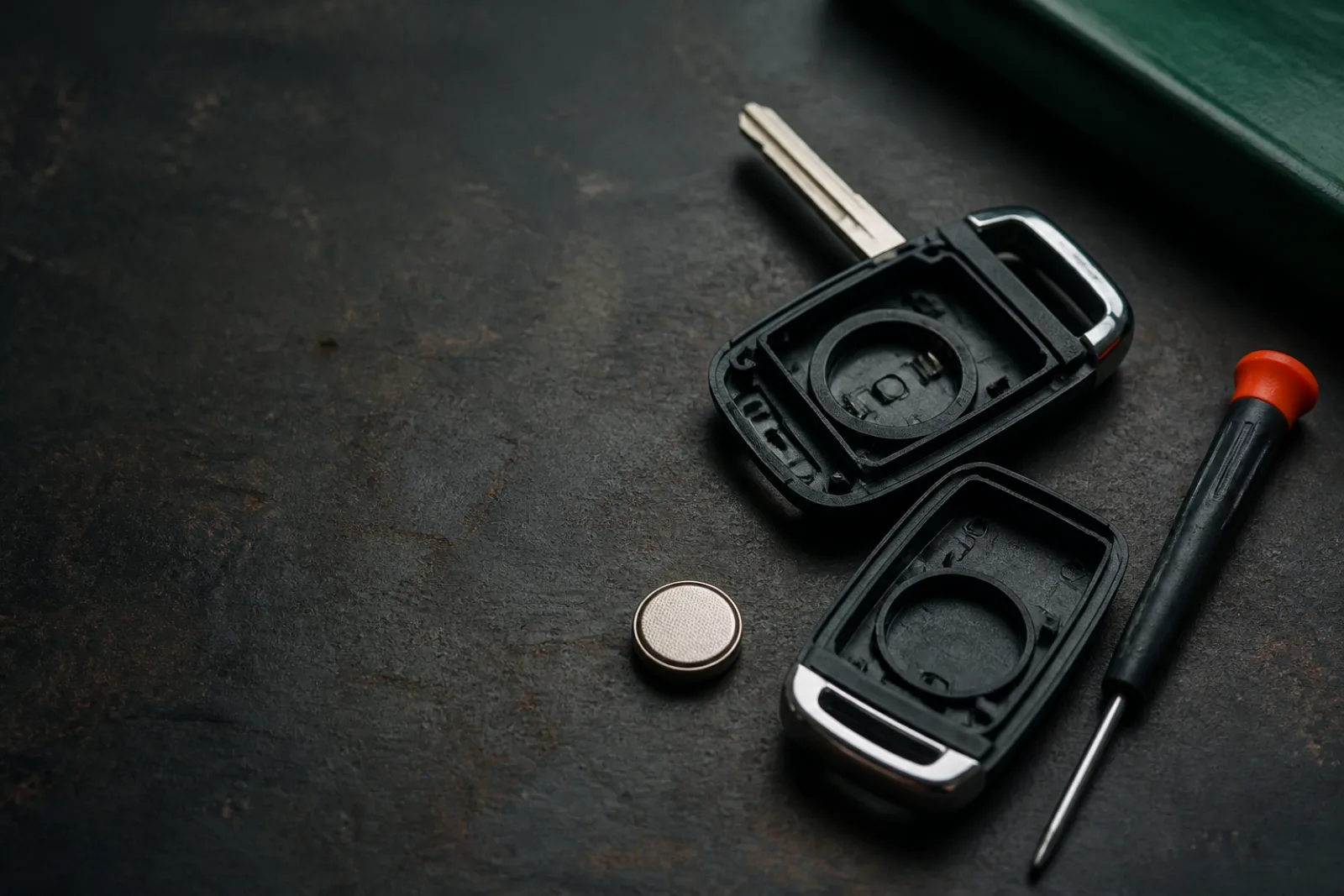
A replacement shell is not a complete replacement key. Moving parts between shells can damage small components, and a new-looking case does not correct a worn blade or unsupported electronic issue.
Mechanical wear deserves its own path
A key that needs a wiggle, catches in one door, or shows a bright worn ridge may be mechanically worn. Try the lock gently with the door under no pressure. If a house-style test is not possible on the vehicle, do not compensate with more force.
If the blade is bent, cracked near a deep cut, or loose in the head, retire it before it breaks. The car key replacement cost guide explains how key type and working-copy status influence cost.
A door cylinder can also be stiff from wear, debris, prior damage, or infrequent use. A fresh battery will not change that. Report the exact mechanical symptom to the provider.
When to stop troubleshooting
- 1Stop for heat or swelling
Move away from a damaged battery device and follow manufacturer safety guidance.
- 2Stop for water or corrosion
Do not repeatedly energize a wet or corroded key.
- 3Stop for mechanical resistance
Do not twist a bent blade or force a loaded cylinder.
- 4Ask exact support
Give year, make, model, key type, and remaining functions.
A locksmith or dealer should say whether the exact key type and requested function are supported. Hi-Q confirms duplicate car-key service and offers key-fob programming for supported vehicles. That boundary matters when the buttons or vehicle recognition are the problem.
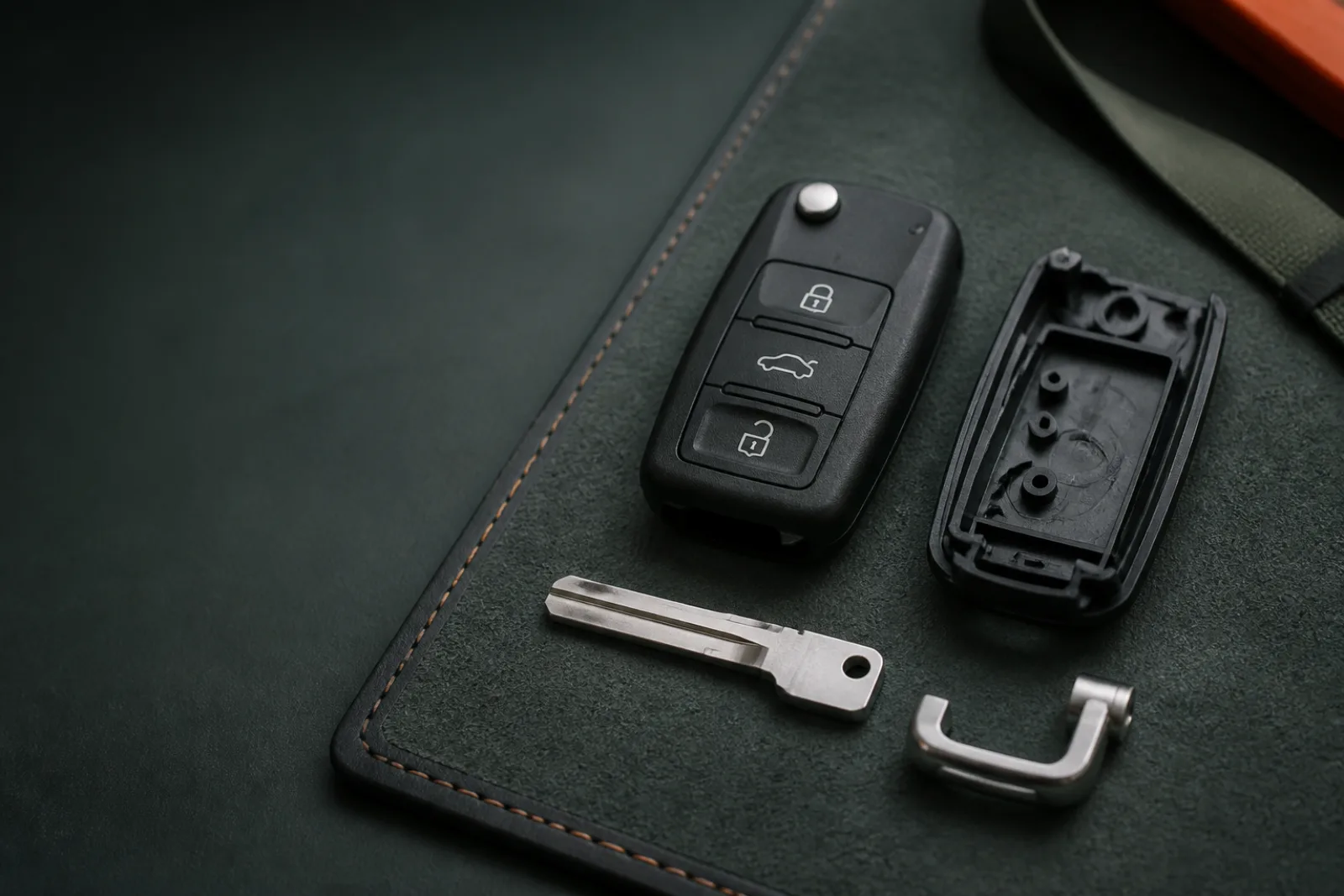
Bring every piece, the better spare, ownership documents, and the vehicle details. A careful description often saves a wrong battery, wrong shell, or unsupported dispatch.
After battery or shell work, test only the functions the provider or manual says should work. Do not assume one successful button press proves the blade, starting function, emergency access, and every spare are all fine. Keep the old part until the result is confirmed, unless it is damaged or unsafe to retain. Then record the battery type and date without putting the vehicle address on the note. That modest record makes the next intermittent failure much easier to diagnose.
Named sources
Frequently asked questions
Does a dead battery mean the whole car key must be replaced?
Not necessarily. Follow the vehicle manual and separate battery symptoms from shell, blade, vehicle, and other electronic issues.
Can I use any coin battery that fits?
No. Use the exact battery type and orientation specified by the manufacturer.
Why does the blade work when the buttons do not?
The mechanical blade and remote functions are separate parts of the assembly, so one can work while the other fails.
Does Hi-Q program key fobs?
Hi-Q offers key-fob programming for supported vehicles, and feasibility depends on the year, make, model, key type, and whether a working key exists. Ask whether your exact key type and requested function are supported.
Should I tape a cracked key shell?
Tape may be a short-lived way to keep loose pieces together, but it can interfere with buttons or the blade. Stop using a badly damaged shell and get the exact key assessed.
Continue reading
Dealer vs Locksmith for a Replacement Car Key
A practical way to compare a dealership and a mobile locksmith for replacement or duplicate car keys without assuming every provider supports every key.
Car Key Types Explained: Metal Keys, Transponders, Remotes, and Fobs
A plain-language glossary of automotive key types and how to tell them apart before you order help.