
Quick answer
- Commercial door trouble often involves more than the lock cylinder.
- Repair preserves serviceable components; installation is for hardware that needs to be changed or added.
- Authorization and clear access planning are part of the job before hardware is altered.
- Hi-Q confirms commercial lock repair and installation, not a broader unverified hardware menu.
Why assess the whole commercial opening?
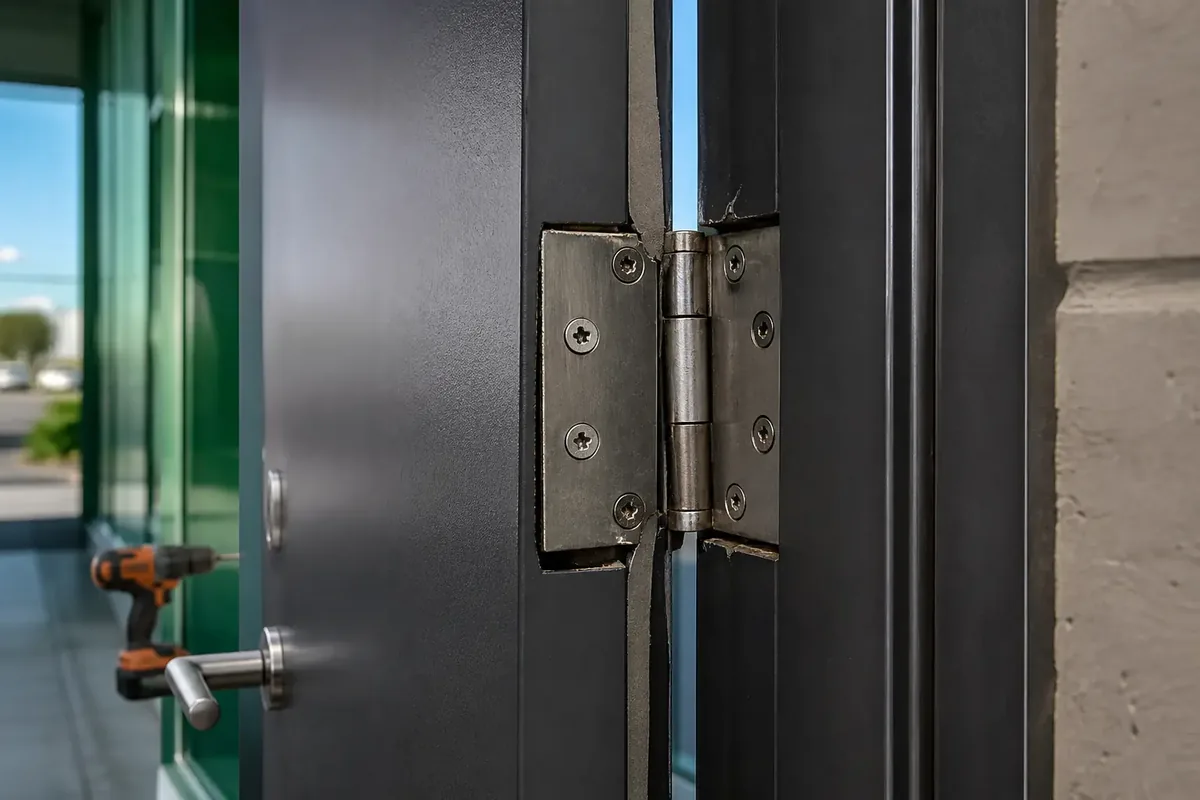
A commercial lock only works as part of a door system. The latch has to meet the strike, hinges have to hold alignment, the closer has to let the door close as intended, and the frame has to support the opening. When one of those components is off, a lock can feel broken even when the cylinder itself is not the cause.
That is why the first step is an inspection instead of an automatic part sale. A business door that will not latch, has loose hardware, binds at closing, or has a damaged lock may need a focused repair. The technician should describe what is failing and why, then explain whether the existing component can be reliably repaired or whether installation is the sounder option.
How do repair and installation differ?
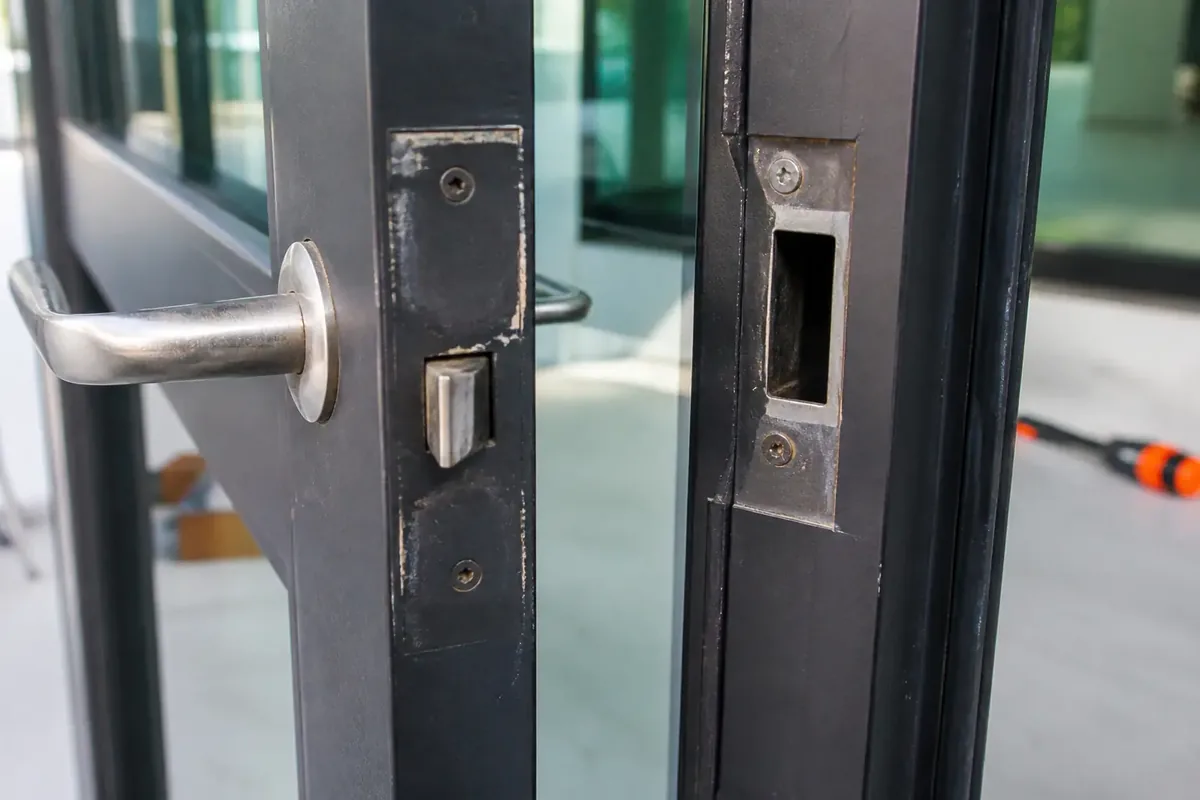
Repair is intended for hardware that still has useful life but needs correction: an adjustment, a failed component, or a condition affecting reliable operation. Installation is appropriate when hardware is damaged beyond a dependable repair, incompatible with the opening, or no longer suitable for the business’s actual needs. The correct answer depends on the door in front of the technician, not a generic sales script.
A property manager or business owner should identify the door’s use and who can approve work before the visit. A suite entry, storefront, storage door, and employee entrance may have different access and operating needs. Clear authority and a plain description of the symptom keep the inspection efficient and prevent an avoidable return trip.
- Door will not latch or stay closed.
- Lock, trim, or cylinder is loose or visibly damaged.
- Key works inconsistently even after checking the door alignment.
- Hardware no longer fits the reliable operation the opening needs.
What should be clear before work starts?
Ask what mechanical condition was found, whether repair or installation is recommended, and what hardware, labor, and access coordination are included in the quoted scope. If the problem changes once the opening is inspected more closely, the revised work should be explained before it begins. That clarity matters more than a low initial number that leaves out the actual door condition.
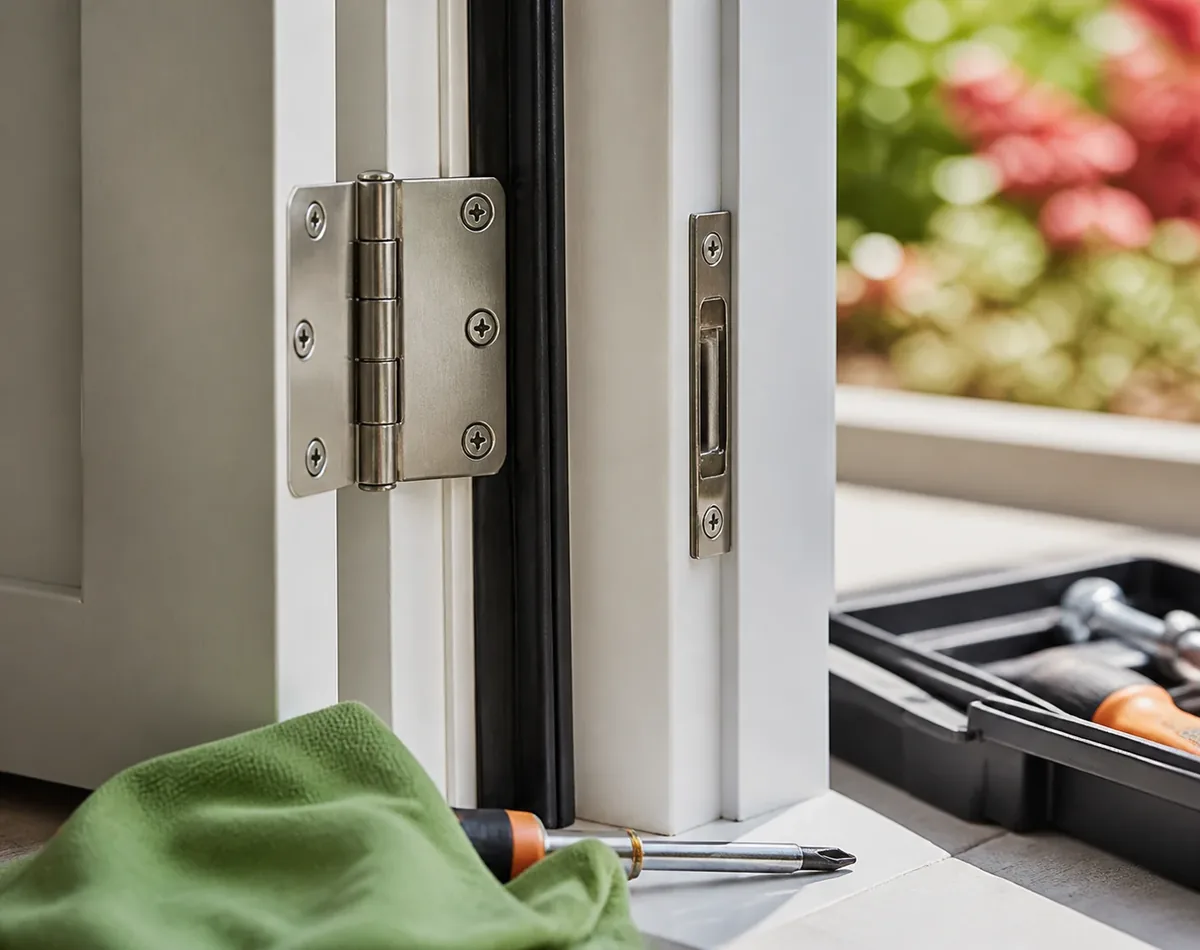
Hi-Q’s confirmed commercial scope includes rekeying, lock repair and installation, and emergency lock service. It does not add unsupported electronic-access, master-key, or code-certification claims. The honest promise is a practical assessment of the mechanical business-door problem and a clear next step.
If the door is urgently preventing secure access or normal operations, see commercial emergency lock service. The same careful assessment applies, with the business explaining the urgency and authorization during the call.
Commercial Lock Repair and Installation FAQs
Why will my commercial door not latch?
The cause can involve the latch, strike, frame, hinges, closer, or lock. A whole-opening assessment is needed before deciding on repair or replacement.
Can commercial lock hardware be repaired?
Often yes when the component remains serviceable. Installation is appropriate when repair would not leave the opening reliable.
Who can approve commercial lock work?
The requester should be able to authorize access or changes to the business hardware, such as an owner, property manager, or other responsible representative.