Quick answer
- Sticking, looseness, and missed latching are early warning signs.
- The lock is only one part of the opening system.
- Repair may be enough if the problem is alignment or a worn component.
- Replacement is better when the hardware is obsolete or unsafe.
1. The key starts sticking
A key that suddenly needs more force is usually telling you that something is changing inside the cylinder or at the door itself. The problem may be wear, debris, misalignment, or a component that is beginning to fail.
The commercial locksmith page lists the confirmed business services. The published locksmith cost guide lists dispatch at $35 to $95 and labor at $75 to $150.
Do not force the key through the resistance. Forcing it can break the key and turn a small maintenance issue into an extraction call.
2. The latch misses the strike
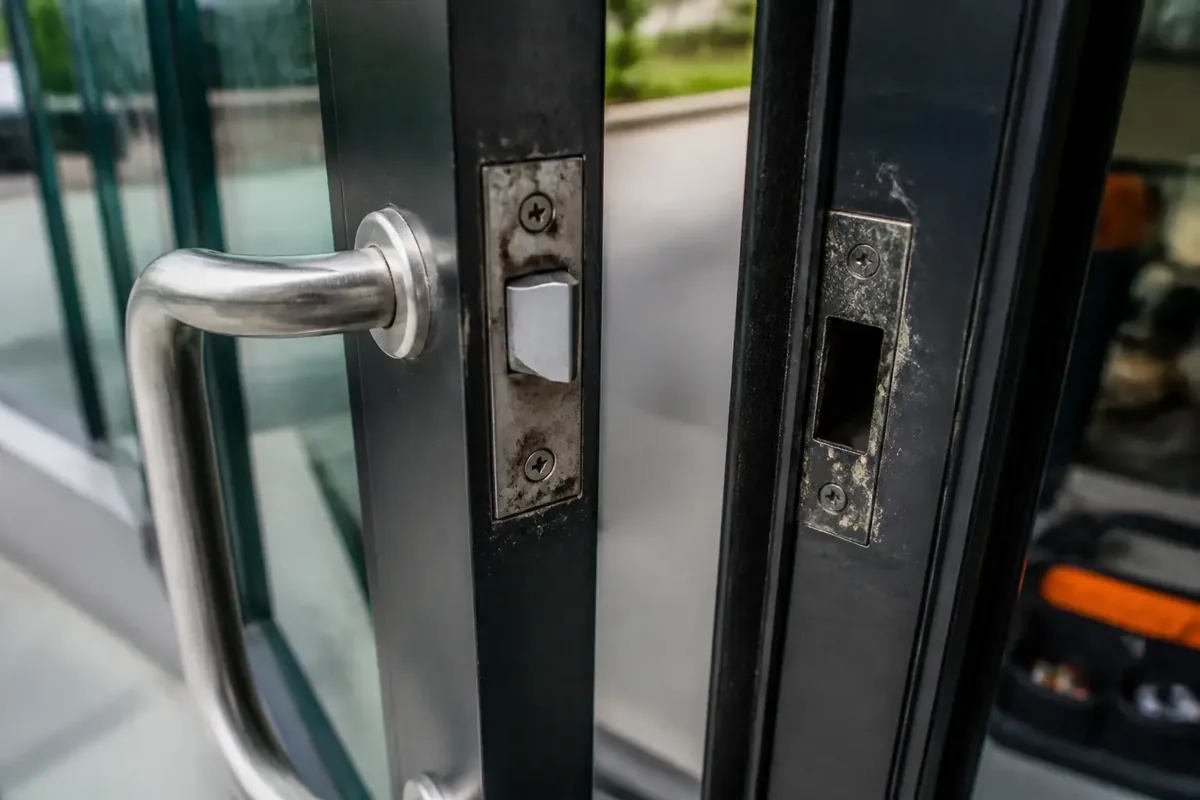
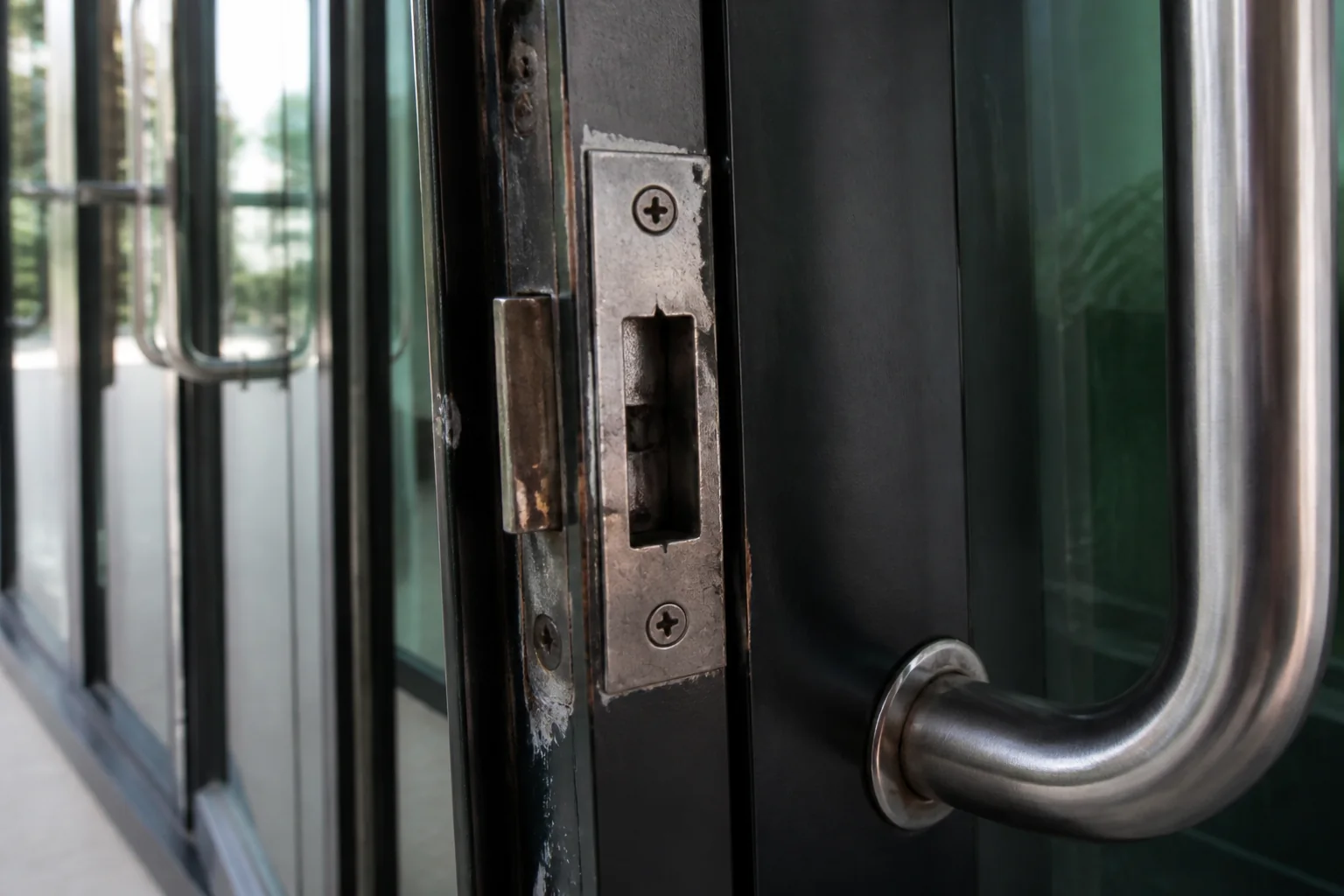
If the door has to be lifted or slammed to latch, the lock may not be the real problem. A sagging door or shifted strike plate can be just as responsible.
That is why the opening should be evaluated as a system. Fixing the cylinder alone will not correct a frame issue.
3. The hardware feels loose
Loose trim or a lever that moves on the door is a warning. The hardware may be wearing out or the door may be flexing.
If the hardware shifts when people use it normally, the chance of failure usually increases under heavier traffic.
4. The door scrapes or sags
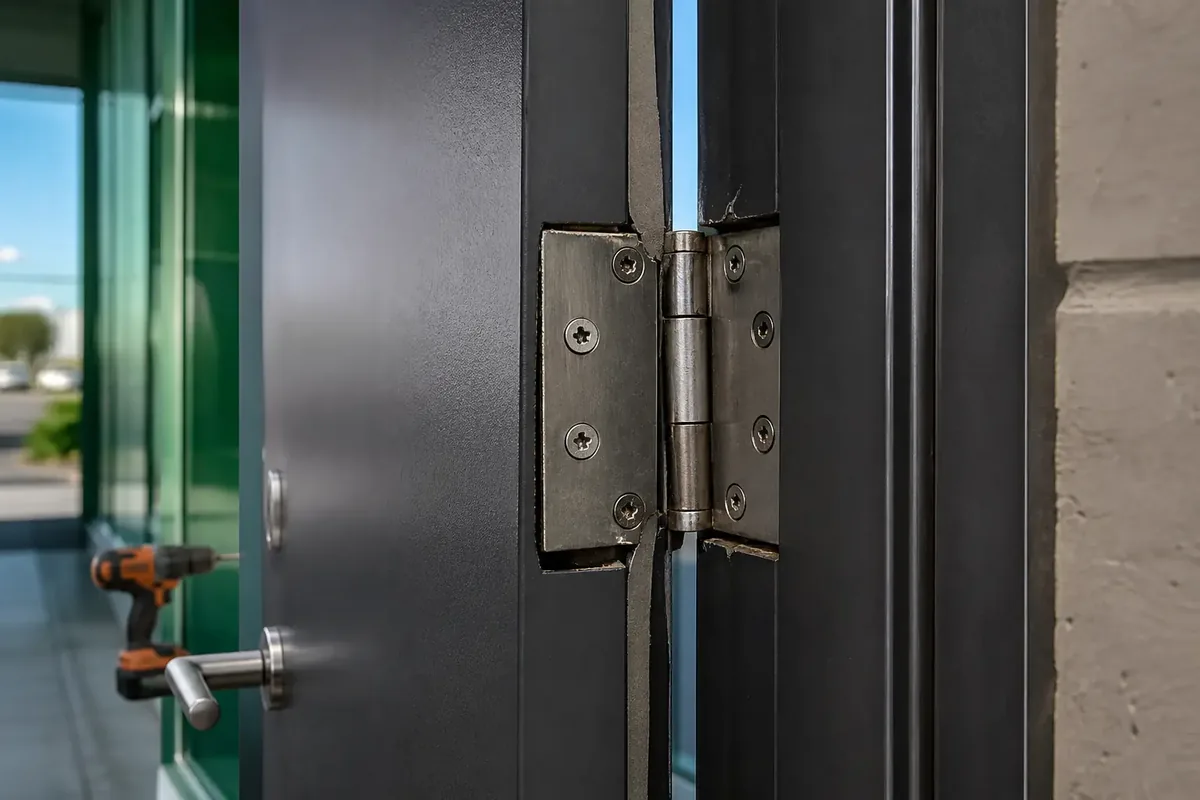
A door that drags on the frame can create a false lock problem. The hardware may be fine while the alignment is not.
Commercial doors see more traffic than residential doors, so alignment drift is common in high-use openings.
5. The closer slams or stops closing
A door closer that slams, closes too slowly, or fails to pull the door shut can leave the lock looking faulty when the real issue is elsewhere. If the door does not close correctly, the latch cannot do its job.
That makes closer adjustment part of a serious lock inspection, not an optional extra.
6. Access becomes intermittent
A lock or access device that works one day and fails the next is telling you that reliability is slipping. Intermittent operation is often more disruptive than a complete failure because staff can never fully trust the opening.
That uncertainty alone can justify service before the problem becomes a lockout at the wrong time.
7. There is visible damage or a recent incident
Bent hardware or a failed break-in attempt are reasons to inspect the opening immediately. Even when the door still closes, hidden damage can remain behind the surface.
After an incident, the real question is not whether the lock still turns. It is whether the opening still protects the business the way it should.
How to prepare for commercial service
- 1Identify the authorizer
Know who can approve the work before the technician arrives.
- 2List the affected openings
Write down the doors, gates, and access points that are actually involved.
- 3Share the symptoms
Describe whether the issue is sticking, misalignment, looseness, or a break-in concern.
- 4Protect egress
Do not defeat fire or exit hardware while waiting for service.
For a Fort Worth commercial opening on Denton Highway, give Hi-Q the door location and the person authorized to approve work before dispatch.
Frequently asked questions
Can a locksmith fix a commercial lock that will not latch?
Often yes, but the cause may be the strike, hinges, closer, frame, or the lock itself. Inspection is needed first.
Should a business repair or replace a worn lock?
Repair is enough when the hardware is still compatible and structurally sound. Replace it when the lock is too worn, damaged, or obsolete to remain reliable.