
Quick answer
- The first number may not include the same work.
- Cylinder count, key type, damage, access, and timing can change labor and parts.
- Inspection uncertainty should have clear approval rules.
- The cost guides own current ranges; this article explains the mechanics.
- Save estimate assumptions with the final invoice so every change has a visible reason.
- Scope matters.
A quote is a bundle, not one number
When one caller says $85 and another says $170, they may not be pricing the same thing. One figure can be dispatch plus simple labor. Another can include travel, two cylinders, keys, and a known part. A third may be a starting price that changes after inspection. Strip away the labels and write down the bundle.
Use the general locksmith cost guide for local ranges and the emergency cost guide for urgent-call variables. This page explains why those ranges widen.
A dispatcher cannot see concealed damage or count cylinders from 'change my locks.' Good questions reduce uncertainty. They do not make every job predictable from a phone call.
The six pricing buckets
| Bucket | Example | Question to ask |
|---|---|---|
| Dispatch | Travel and route commitment | Is it included? |
| Labor | Entry, rekey, repair, cutting | What exact task is priced? |
| Parts | Cylinder, lock, key blank, fasteners | Which part is assumed? |
| Access | Gate, garage, parking, restricted building | Can the technician reach the opening? |
| Timing | Scheduled versus urgent availability | Does timing change the range? |
| Uncertainty | Damage or incompatible hardware | What finding changes the total? |
In downtown Fort Worth, parking and a controlled loading entrance can be part of the job even when the cylinder is ordinary. In Saginaw, a commercial back door can need an authorizer on site. In a Benbrook house, six exterior cylinders cost more to rekey than the one front door mentioned on the first call.
Vehicle work adds year, make, model, key type, working-key status, and location. A metal duplicate is not the same deliverable as a no-working-key situation.
Why inspection can change the price
A phone estimate relies on the caller's description. On arrival, the 'deadbolt' may be a mortise cylinder, the door may be sagging, the key may be broken inside, or prior prying may have damaged the frame. Those are legitimate scope changes when they are shown and explained.
A legitimate change still needs consent. The technician should state what was found, why the original method no longer fits, the added parts or labor, and the revised total before continuing. Pressure is not approval.

If the provider cannot say what conditions move the range, treat the estimate as incomplete. The FTC's consumer guidance likewise emphasizes asking about fees and getting an estimate before work.
How to make three quotes comparable
- 1Describe one job
Use the same address, opening, cylinder count, vehicle details, and symptoms.
- 2Ask for inclusions
List dispatch, labor, parts, keys, tax, and testing.
- 3Ask for change points
Identify damage, compatibility, access, and timing assumptions.
- 4Set approval
Require an explanation before drilling, replacement, or added work.
Do not ask one company for a rekey and another to replace all hardware, then compare totals. If you are not sure which fix applies, request separate rekey, repair, and replacement scenarios where possible.
The five-minute rekey versus replace worksheet helps build that scope before the call.
Why locksmiths can seem expensive
The invoice covers more than minutes at the door. It can include licensed skilled labor, mobile travel, stocked parts, specialized equipment, insurance, authorization checks, non-billable route time, and the responsibility of altering access to a home, business, or vehicle.
That does not mean every charge is reasonable or every estimate is clear. Ask for the business identity, total range, invoice, and approval rule. Compare facts and walk away from pressure or a provider whose name keeps changing.
The best value is the correct supported job completed without avoidable damage, surprise scope, or a second visit caused by the wrong part. Sometimes that is the lowest quote. Sometimes it is not.
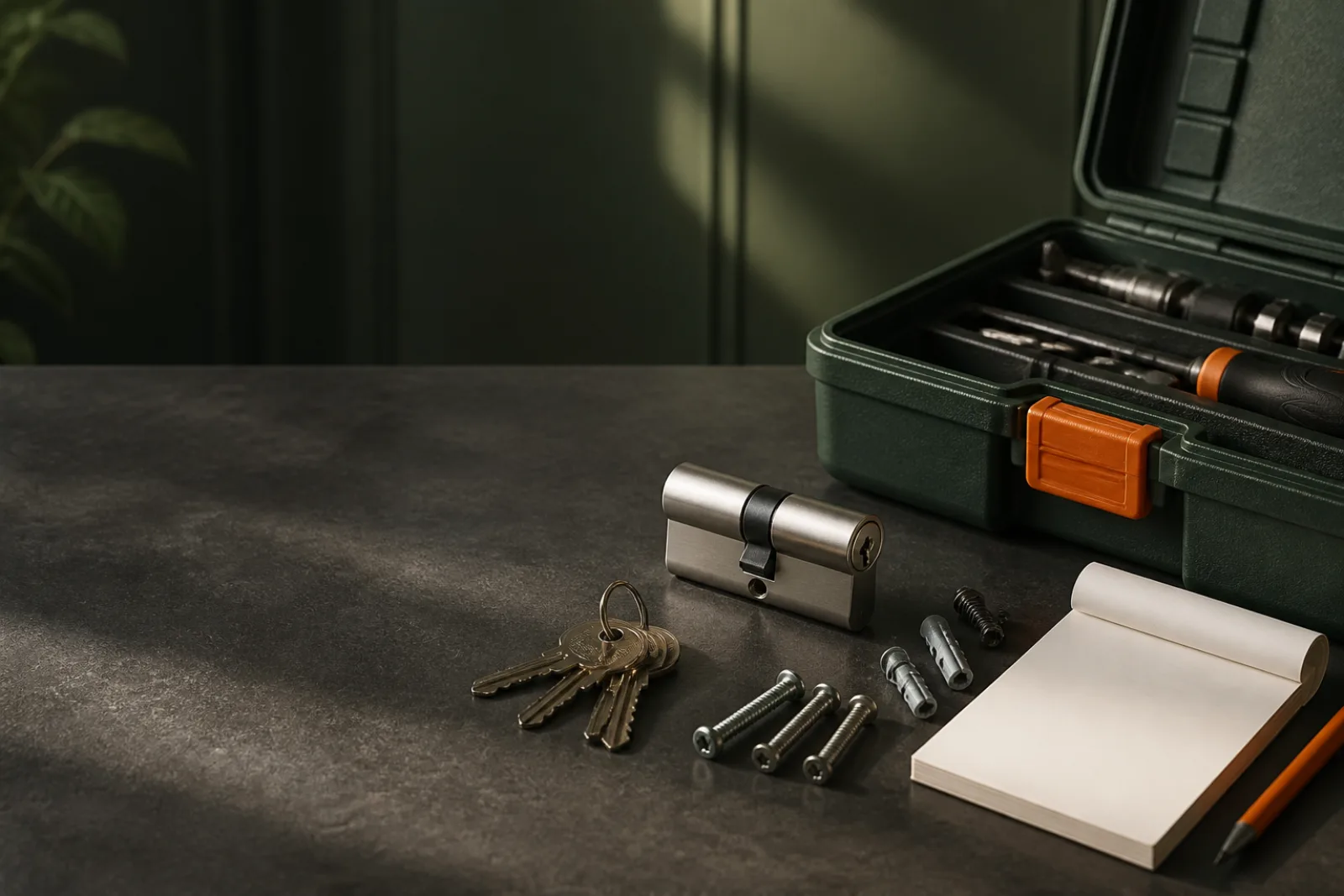
Keep the final invoice beside the notes used to compare estimates. Mark which assumptions proved true, which parts were added, and which symptoms remain. This is useful for a property manager who will see the same door again or a household with several similar locks. If a quote changed, the record should show the inspection fact and approval, not just a larger total. Good pricing mechanics are visible after the job as well as before it.
Named sources
Frequently asked questions
Why do locksmiths charge a dispatch fee?
Mobile service commits travel, route time, a stocked vehicle, and a technician. Ask whether dispatch is included and what happens if the job is canceled.
Can a phone quote be final?
Sometimes, when scope and hardware are clear. Damage, incompatibility, access, or an inaccurate description can require a revised estimate with approval.
Why does cylinder count matter?
Each cylinder can require separate labor, compatibility checks, and keying work. One door can also contain more than one cylinder.
How do I compare starting prices?
Do not compare them alone. Compare the complete scope, assumptions, change points, parts, timing, and approval rules.
Should I approve drilling immediately?
Ask why it is needed, what alternatives were considered, what replacement follows, and what the revised total will be before approving destructive work.
Continue reading
How to Compare Locksmith Quotes in Fort Worth Without Paying for the Wrong Thing
A practical side-by-side quoting guide for homeowners, drivers, and business owners who need a locksmith price they can actually compare.
The 5-Minute Rekey vs Replace Worksheet
A room-by-room worksheet for deciding whether working locks need new keying, repair, or complete replacement before requesting prices.