
Quick answer
- Dispatch and route planning are part of the trade.
- Authorization and diagnosis come before tools touch the lock.
- The door, frame, key, cylinder, and latch often have to be assessed together.
- Good technicians test the result and document the job.
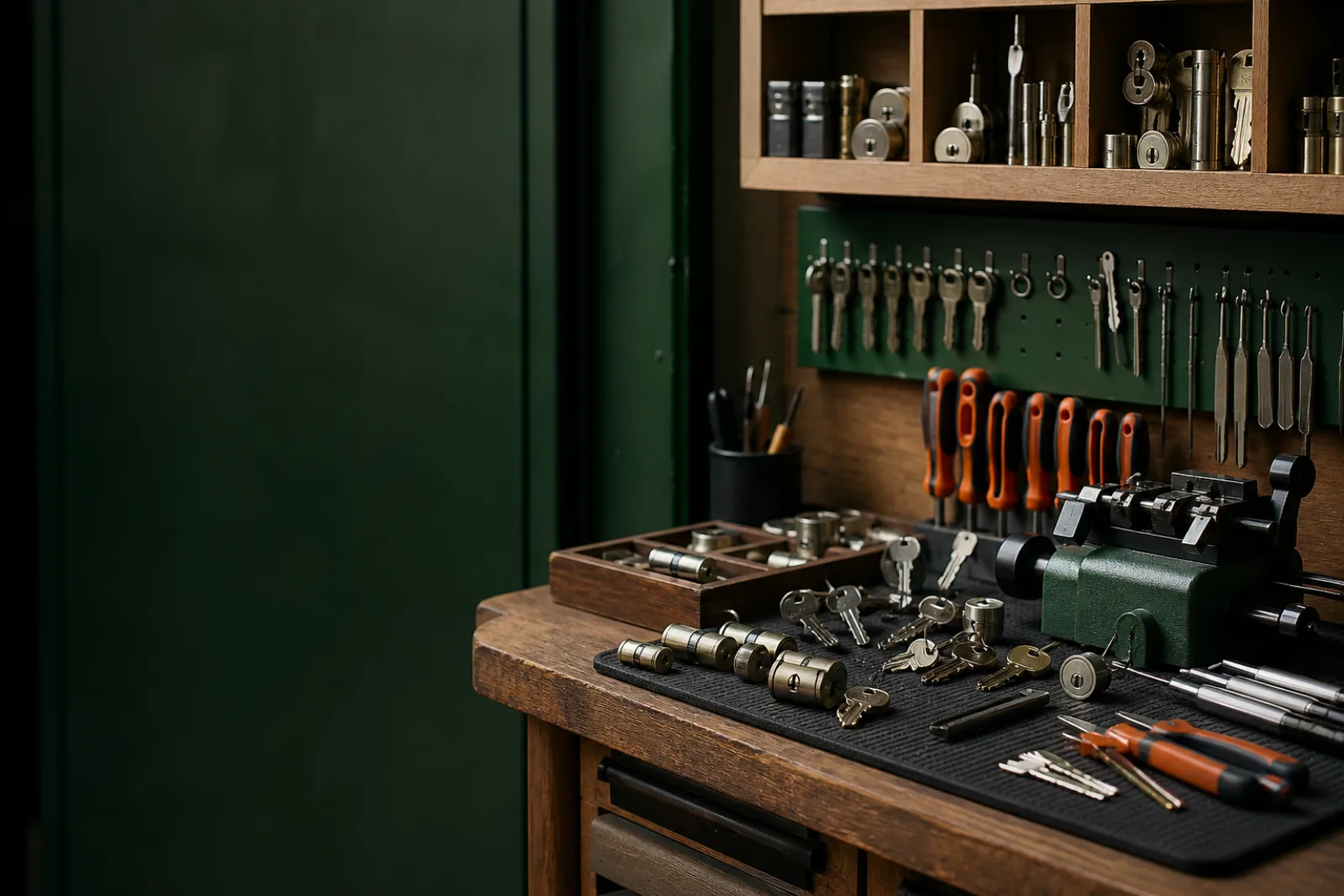
- Van organization, parts inventory, and route notes are part of reliable workmanship.
- Organization matters.
The day starts before the first lock
A mobile workday may begin with a car lockout in White Settlement, continue with three residential cylinders in Benbrook, and end at a commercial door near downtown. The route has to account for I-30 traffic, garage access, parts on the van, and the fact that the current job may reveal something the phone description missed.
Dispatch gathers the location, callback number, service type, urgency, and basic authorization. A useful note says 'rear aluminum storefront door will not latch' or '2012 sedan, keys visible on passenger seat,' not simply 'lock broken.'
The services overview lists Hi-Q's confirmed work. The about page carries the business, license, and owner context a customer should verify before granting access.
Diagnosis is usually the real work

A key that sticks may be worn, badly copied, or fighting a loaded bolt. A deadbolt that turns with the door open but not closed points toward alignment. A commercial lever that feels loose can involve trim, fasteners, a latch, the door, or the closer. Replacing the first visible part without testing the system wastes money.
The technician checks symptoms, existing damage, hardware compatibility, and the least disruptive supported method. On a rekey, cylinder count and key compatibility matter. On a vehicle job, the year, model, key type, and exact problem matter. Honest answers often begin with 'it depends on what inspection shows.'
That uncertainty should not become a blank check. The technician should explain what was found, what changed from the call, and what the revised scope costs before doing extra work.
What is in the van
| Group | Purpose | Why organization matters |
|---|---|---|
| Hand tools and gauges | Inspection, adjustment, supported service | The right tool reduces damage |
| Cylinders and common hardware | Compatible repair or replacement | Wrong parts create repeat visits |
| Key blanks and cutting equipment | Confirmed duplicate work | Profiles and cuts must match |
| Lighting and documentation | See damage and record work | Garages and side entries can be dim |
A tidy drawer is not just presentation. It keeps small pins, screws, cylinders, blanks, and replacement parts from being mixed. It also lets a technician know quickly when a less common part is not on hand.
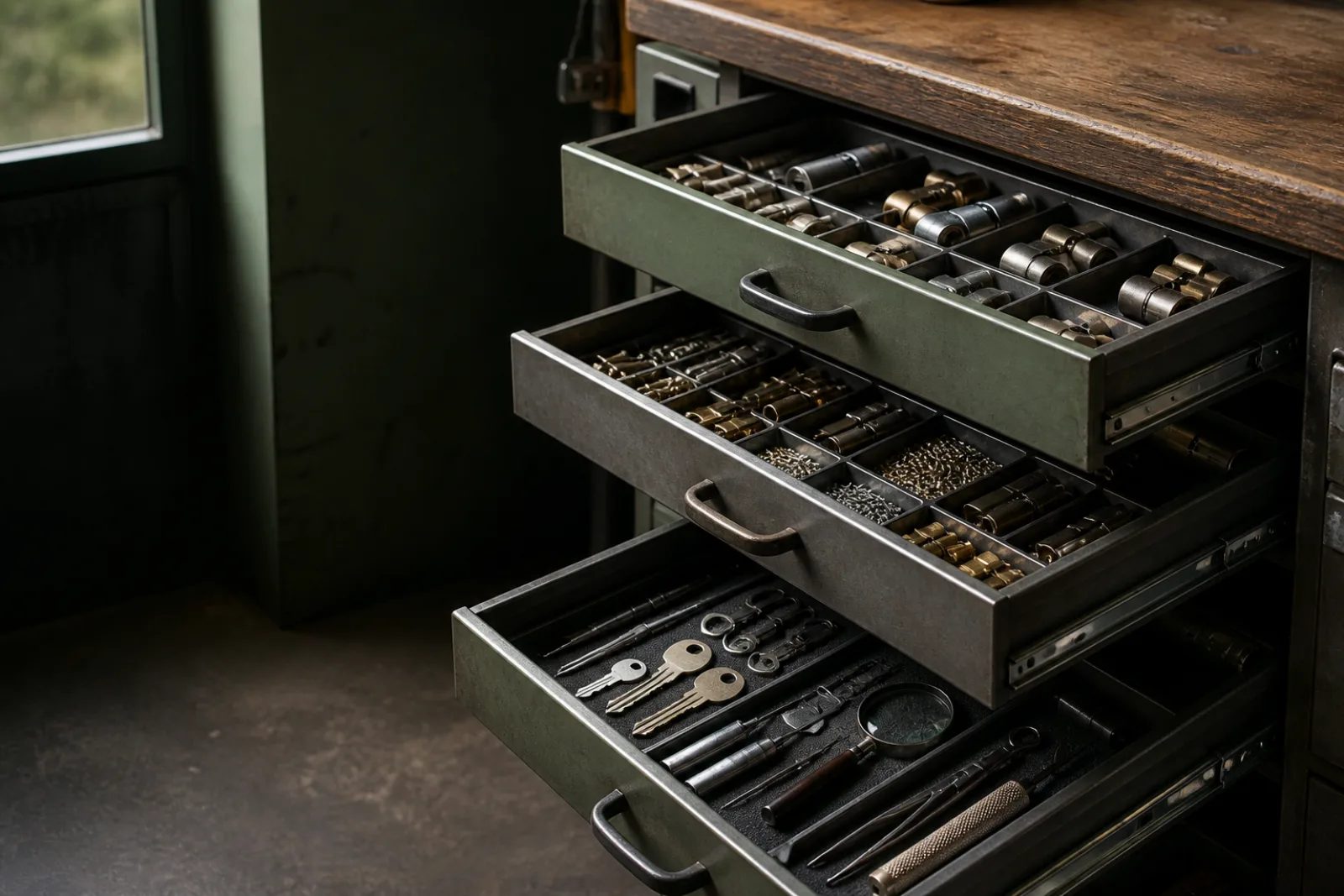
Not every van carries every component for every opening or vehicle. A clear photo before dispatch can help, but it does not replace hands-on inspection or guarantee support.
The customer-facing sequence
- 1Verify
Confirm the company, caller, location, and authorization.
- 2Inspect
Reproduce the symptom without forcing damaged hardware.
- 3Explain
Name the likely cause, method, parts, price, and limits.
- 4Perform
Complete the authorized supported work carefully.
- 5Test and document
Check operation and provide a useful invoice.
For a house, testing means trying the lock with the door open and closed and checking every new key. For a business, it also means respecting required egress and landlord authorization. For a vehicle, the tested result should match the exact confirmed service ordered.
If a carpenter, glass company, dealer, electrician, or access-control specialist is the right next trade, saying so is part of a professional diagnosis.
What the job is not
It is not automatic drilling, a mystery price, or a minute-perfect arrival promise. It is not permission to open any door for any caller. It is also not one unlimited automotive claim. Providers support different keys, vehicles, hardware, and electronic systems.
A good mobile locksmith makes a stressful problem ordinary: verify, inspect, explain, solve what is supported, and leave the opening or key working as agreed. The quiet details are the trade.
If you are preparing for a visit, gather the location, hardware or vehicle details, authorization, and a safe way to meet. That preparation is more useful than learning the names of specialized tools.

Between jobs, the trade includes cleaning equipment, counting common parts, checking that key blanks are separated correctly, returning calls, logging invoices, and planning the next route. A missing fastener can delay a repair just as surely as traffic. So can a vague authorization note at a managed property. Strong mobile work treats organization as part of workmanship. When the van arrives near Camp Bowie or a side street in Watauga, the technician should know what the caller reported, what is supported, and what still needs verification on site.
Named sources
Frequently asked questions
Does a locksmith always drill a lock?
No. The method depends on the lock, condition, authorization, and supported service. Destructive work should be explained and approved.
Why does a locksmith ask for identification?
The provider needs to confirm that the caller is authorized to access or alter the property or vehicle.
Can a mobile locksmith carry every possible part?
No. Clear details and photos can help, but uncommon or vehicle-specific parts may require sourcing or another provider.
What should happen before the price changes?
The technician should explain the inspection finding, revised method or parts, and updated total before extra work begins.
Continue reading
Calling a Mobile Locksmith: What to Expect From Dispatch to Invoice
A transparent walkthrough of identity checks, estimates, authorization, service, and documentation.
Why Locksmith Quotes Differ So Much: How Pricing Actually Works
A plain-language look at dispatch, labor, hardware, access, timing, uncertainty, and why two locksmith quotes may describe different jobs.