Quick answer
- Safety comes before convenience when a person, pet, heat, or fire risk is involved.
- A good call includes the exact location and the vehicle year, make, and model.
- Avoid wedges, wire, or other improvised entry tools.
- Proof of authorization may be needed before the vehicle is opened.
Start with safety, not the door
A car lockout is ordinary only when nobody is in danger. If a child, vulnerable person, pet, or medical emergency is involved, call 911 or local emergency services first. A vehicle stopped near I-20 or Loop 820 also needs a safe, visible waiting spot before a service call.
If you need help right now, the car lockout service page covers dispatch and pricing. The published emergency locksmith cost guide lists $125 to $350 after hours and $75 to $225 at standard hours.
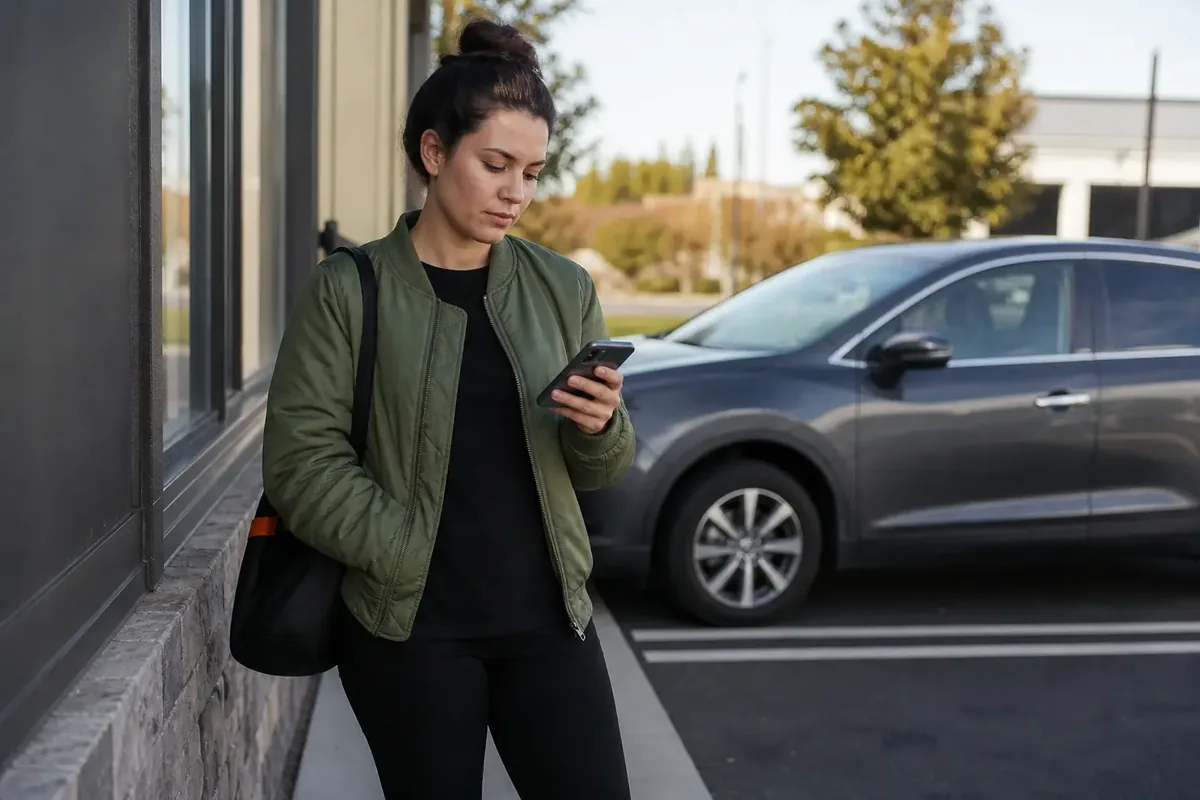
If there is no emergency, step away from traffic, choose a visible location, and keep your phone accessible. The point is to stabilize the situation so you can make a clean call instead of rushing into damage.
What to say when you call
- 1Share the exact location
Give the lot, garage level, entrance, cross-street, or landmark. Vague directions slow everything down.
- 2Give the vehicle details
Provide the year, make, model, and whether the keys are visible inside. That helps the provider determine whether the job is a standard entry or something more complex.
- 3Mention damage or complications
Tell the dispatcher if the door, window, seal, or lock is already damaged. Existing damage can change the safest method.
- 4Ask for the range
Request an estimated arrival window and a price range that includes any likely dispatch or labor charge.
That information is usually enough to prevent the most common dispatch surprises.
What not to do while waiting
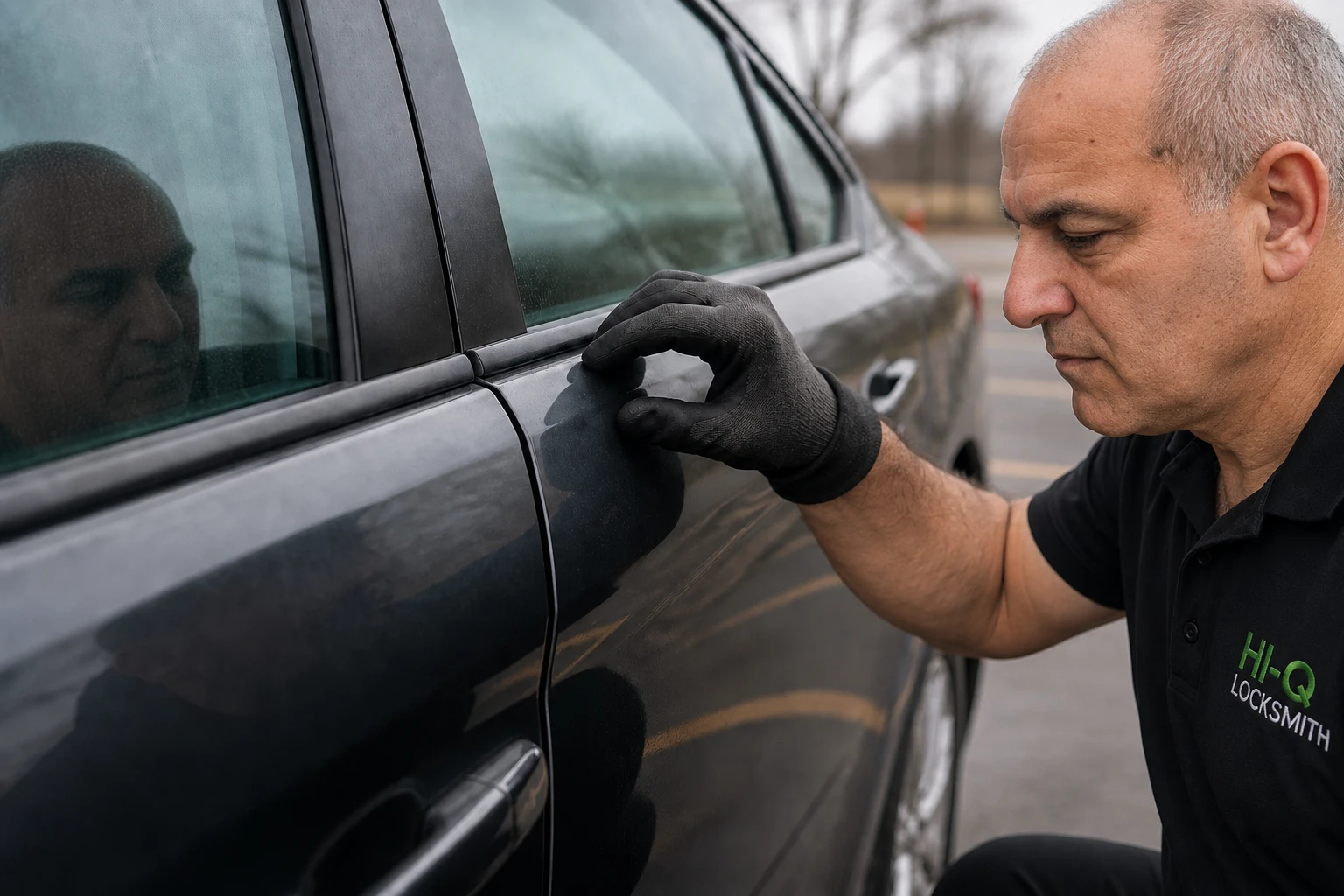
Do not pry at the door seal, push wire into the window channel, or use a hanger, wedge, or screwdriver. These shortcuts can bend the frame, scratch glass, damage wiring, or interfere with safety systems.
Do not keep trying random methods after the first failure. Repeated attempts can turn a no-damage unlock into a repair bill.
Treat it as a safety issue first. A running vehicle in a garage or enclosed area may need emergency response, not ordinary lockout help.
What proof and preparation help
A locksmith or roadside provider may need to confirm that you are authorized to access the vehicle. Keep registration, insurance information, or identification ready if you can reach it.
If the documents are locked inside, say so up front. That allows the dispatcher to explain the verification process before anyone arrives.
What a professional approach usually looks like
Hi-Q verifies authorization before entry and explains the supported method before work begins. After entry, Hi-Q checks the door operation before closing the call.
If the vehicle has prior damage or unusual hardware, Hi-Q explains any change in approach before continuing.
Frequently asked questions
Can I just break a window?
Not for a normal lockout. If there is an immediate life-safety emergency, follow emergency-dispatch guidance. Otherwise wait for professional help.
Will a locksmith need my documents?
Often yes. Be prepared to show that you are authorized to access the vehicle.