
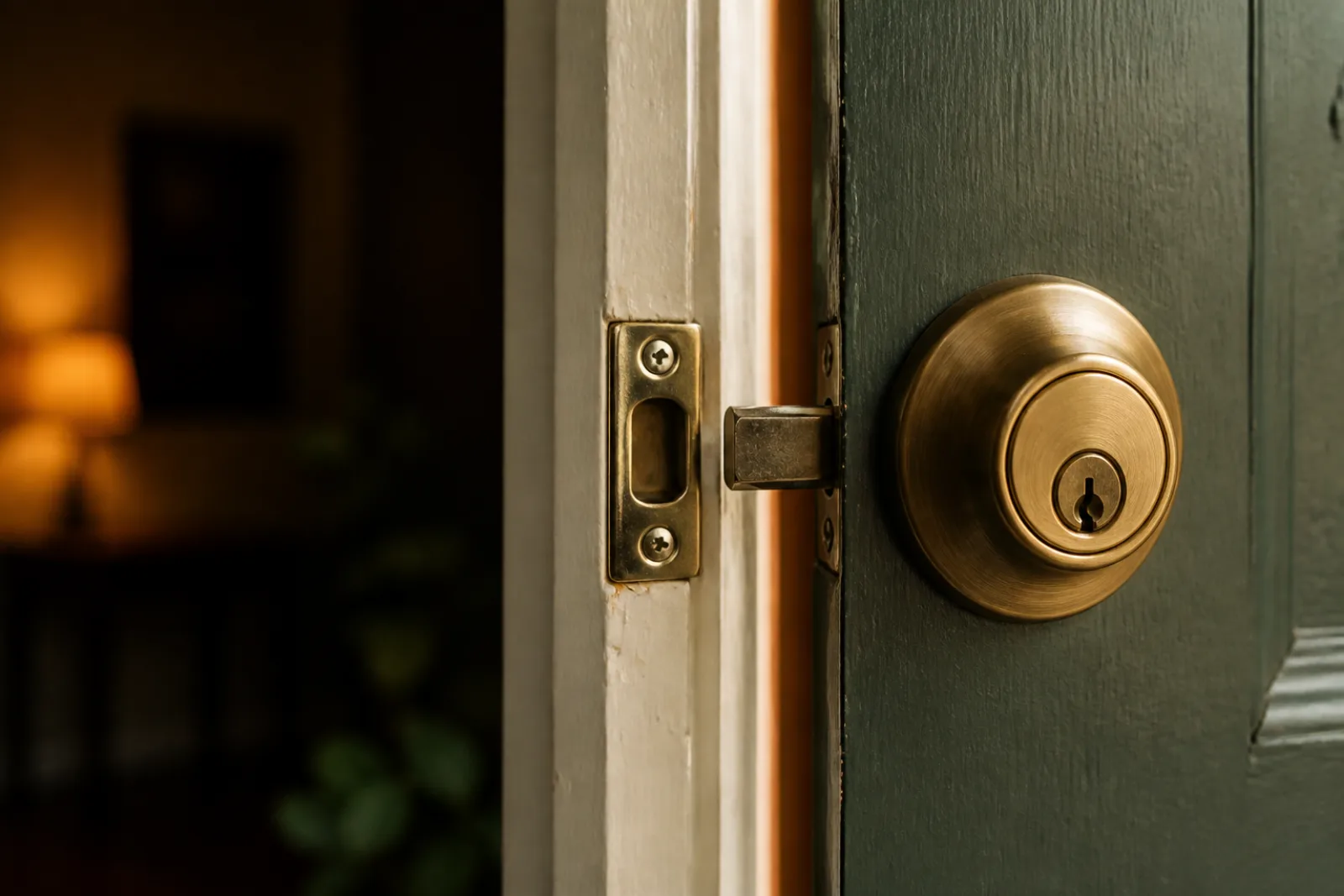
Quick answer
- Open-versus-closed testing separates many alignment problems from lock problems.
- Do not slam, lift, or force the key as a permanent workaround.
- Tighten only clearly loose accessible screws without dismantling rated hardware.
- Secure an unsafe opening and call the correct residential or commercial service.
- Photograph the full opening and contact point without revealing addresses, codes, or people.
- Note weather and timing changes.
Minute zero: decide whether this is safe to test
Stop if the door shows fresh pry damage, the frame is split, required exit hardware is defeated, someone may be inside unlawfully, or the opening cannot be secured. For a suspected crime, call police. For a commercial exit problem, protect egress and involve the authorized manager.
If the problem is ordinary sticking, do not reach for a drill or bend the strike. Remove pressure from the door and use a known-good key. A ten-minute check is meant to identify symptoms, not perform internal lock repair.
Residential repair belongs on the home lock repair page. Business openings should use commercial lock repair and installation.
Minutes one through three: test the door open
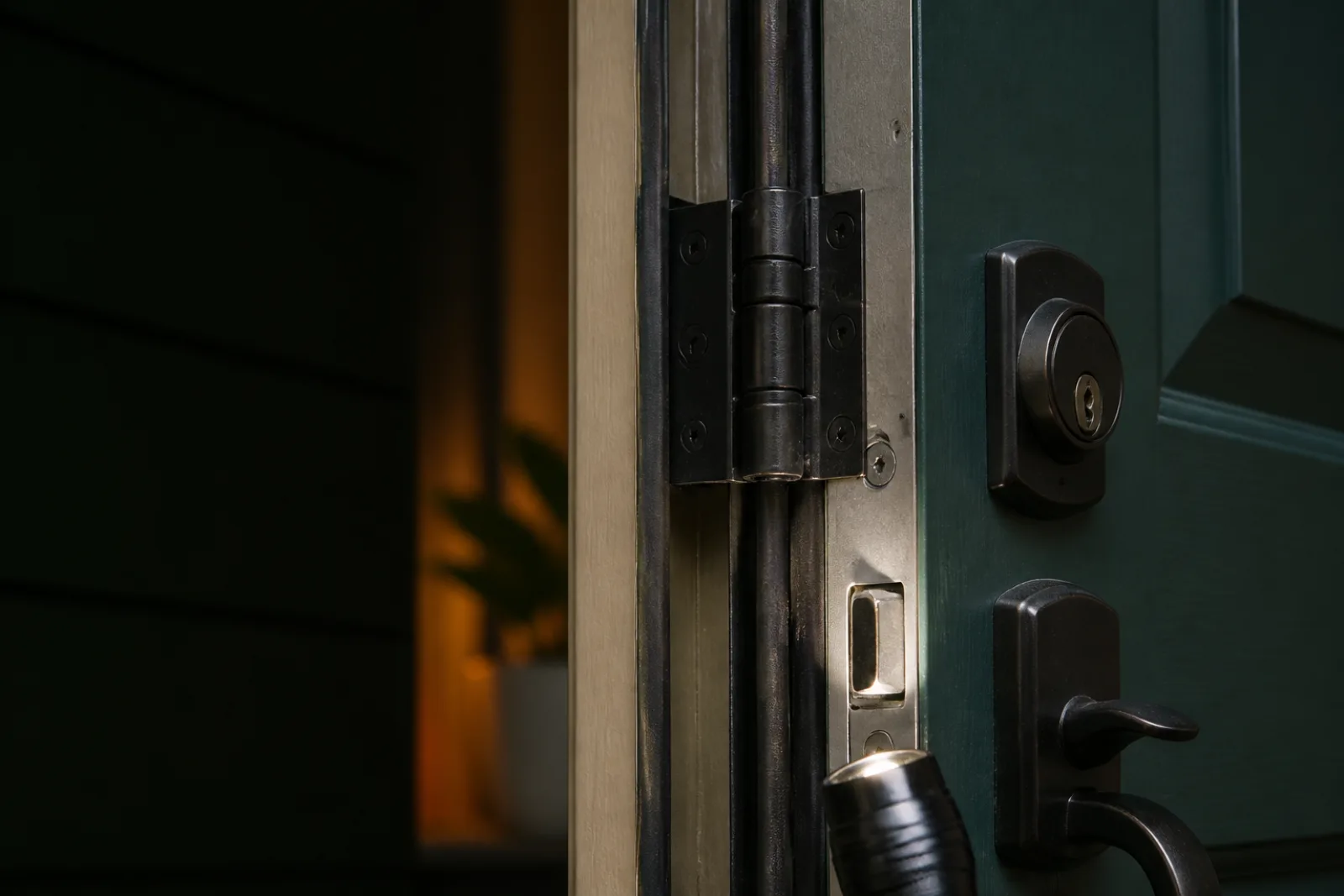
Open the door and turn the key or thumbturn gently. Watch the latch and bolt extend and retract. If everything moves smoothly, the cylinder and basic mechanism can operate without frame pressure. That makes alignment the leading category, though it does not prove every internal part is healthy.
If the lock binds while open, inspect the key for bends, cracks, or heavy wear. Try a better documented copy once. If both keys bind, stop. Repeated force can break a key or strip a weak component.
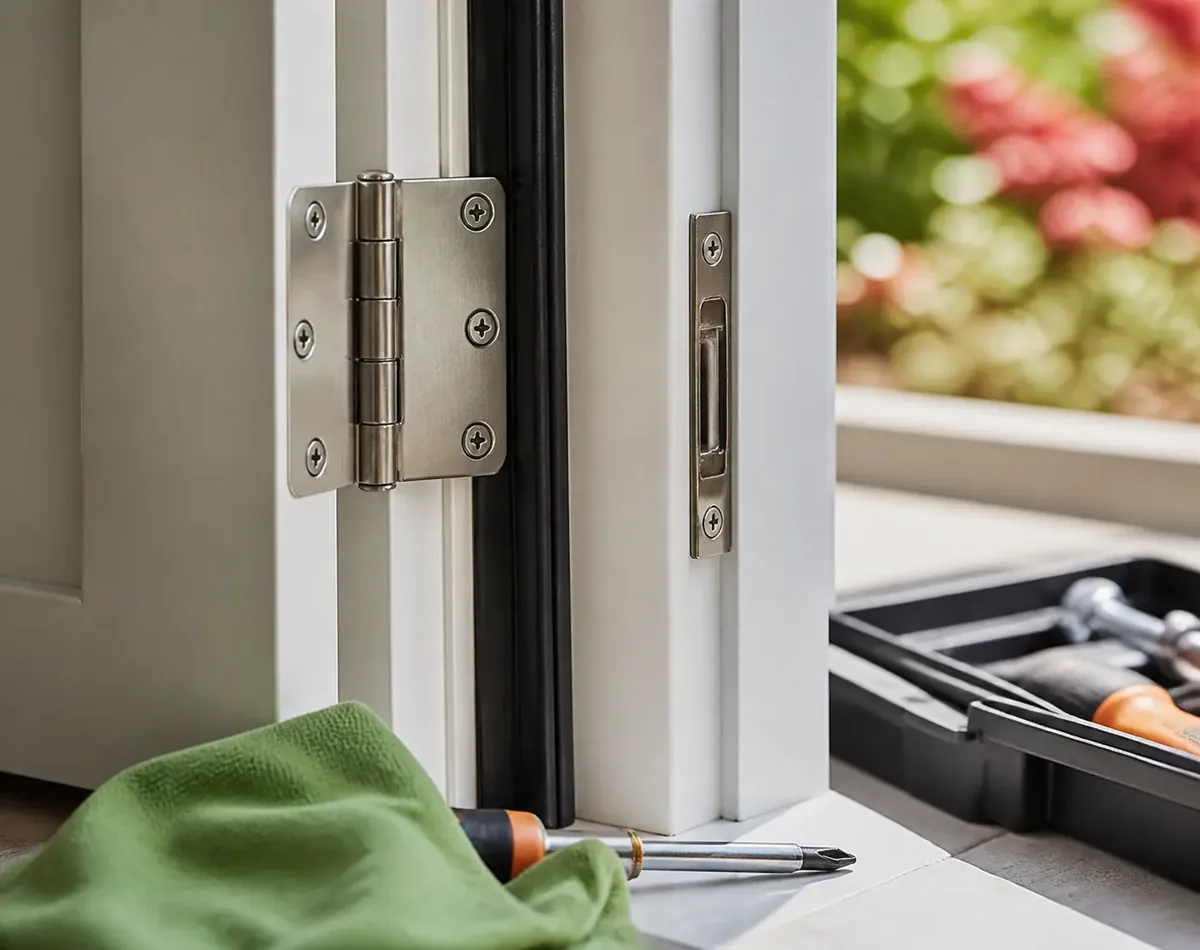
Check loose trim and visible fasteners. Tighten only straightforward accessible screws that clearly belong to the hardware, and do not dismantle commercial, fire-rated, or unfamiliar equipment.
Minutes four through six: close it slowly
| Observation | Likely category | What to note |
|---|---|---|
| Bolt hits above or below strike | Hinge or frame alignment | Direction and amount of miss |
| Latch will not enter strike | Door position, strike, latch | Whether pushing or lifting changes it |
| Weather seal pushes door outward | Seal or seasonal pressure | Where resistance begins |
| Door scrapes threshold | Sag or swelling | Hinge side and scrape location |
Close the door slowly while watching the latch approach the strike. Do not put fingers between the door and frame. If gentle inward pressure makes the bolt line up, note that result rather than teaching everyone to shoulder the door.
North Texas heat, soil movement, humidity swings, and worn hinges can move an opening enough to expose a marginal alignment. The lock did not necessarily fail overnight.
Minutes seven through nine: inspect the surrounding parts
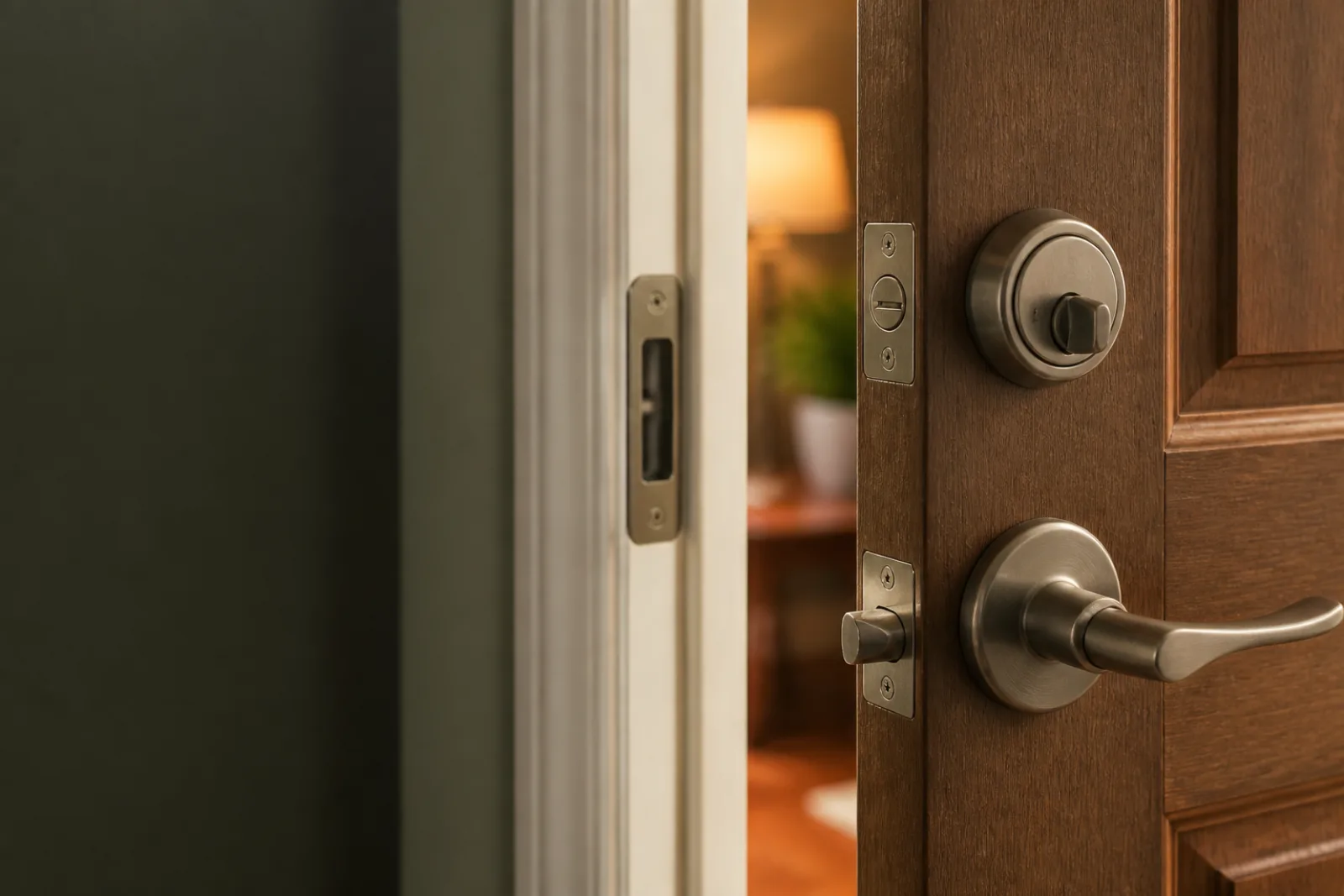
- 1Hinges
Look for loose screws, gaps, sag, or movement while the door swings.
- 2Strike
Check looseness, rub marks, distortion, and pulled fasteners.
- 3Door edge
Look for a loose latch face, splitting, or paint buildup.
- 4Key and cylinder
Note wear, roughness, looseness, and whether every copy behaves alike.
Do not file the strike or enlarge holes based on one rushed test. Removing material can weaken the fit and hide the actual hinge or frame problem. A technician should see the original contact pattern.
For preventive context, the home lock maintenance checklist covers seasonal checks and key wear.
Minute ten: choose the next step
If the issue was a small obstruction you safely removed and the lock now works repeatedly open and closed, record it and monitor the opening. If screws keep loosening, the key remains rough, the bolt misses, or the hardware shifts, schedule repair.
If the door cannot be locked, use another lawful secure entry if available and avoid leaving it unattended. Do not barricade a required commercial exit or create a fire hazard. Call with the door material, hardware type, symptoms, access, and authorizer.
A useful description is 'deadbolt turns open but hits the lower edge of the strike when closed.' That is far better than 'lock broken' and helps the technician prepare.
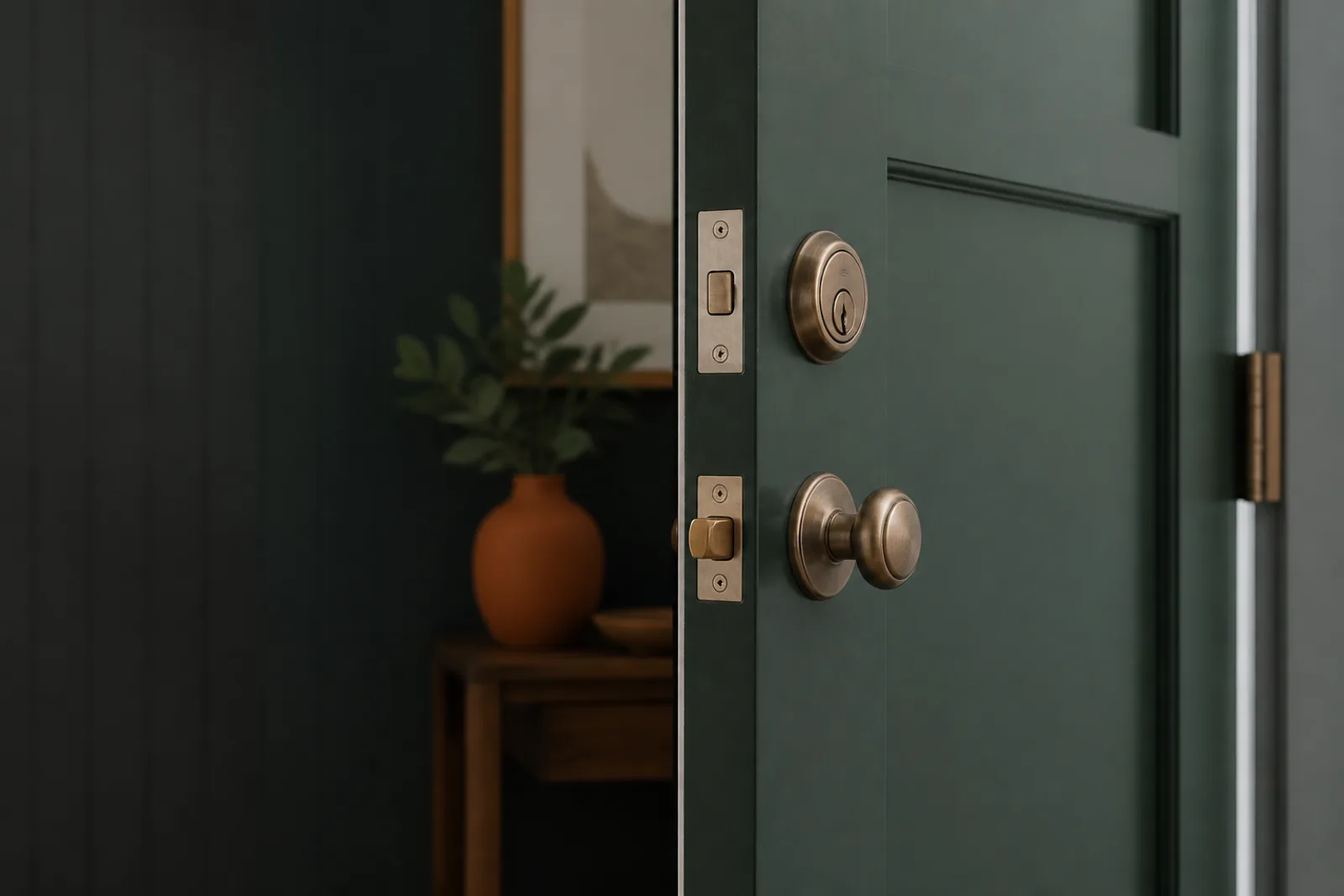
Take two photos when safe: one of the entire closed opening and one of the contact point with the door open. Avoid showing alarm panels, access codes, addresses, or people. Note whether the problem changes by time of day, after rain, or when air conditioning has been running. Those details can reveal movement and pressure that a single visit might not reproduce. If the door was recently painted, weather-stripped, adjusted, or struck, mention that too. The story around the symptom often saves more time than another close-up of the keyway.
Named sources
Frequently asked questions
Why does my lock work with the door open but not closed?
The bolt or latch is probably meeting frame pressure, a shifted strike, sagging hinges, weather seal, or another alignment issue.
Should I force the key while pulling the door?
No. That workaround adds load to the key and mechanism and can lead to a broken key or sudden failure.
Can I file the strike plate myself?
Avoid removing material before the cause is known. Hinge, frame, or door movement may be the real issue.
When is a door problem urgent?
Treat fresh break-in damage, an opening that cannot be secured, or a required commercial exit that will not operate as urgent safety or security issues.
Continue reading
A Home Lock Maintenance Checklist for North Texas
Simple checks for doors, deadbolts, latches, keys, and weather-related alignment changes.
Key Broke Off in the Lock? Do This First
Safe first steps for a broken key in a home, business, or vehicle lock, including what to stop doing and what details to report.